You’ve done the hard part. You found a great product, built a beautiful online store, and are ready to grow. But the flood of organic traffic you hoped for is more of a trickle. You know SEO is the answer, but the landscape of agencies all promising the moon can feel like a minefield. Choosing the right partner isn’t just a marketing decision; it’s a critical business investment that can either unlock explosive growth or drain your budget with little to show for it.
Making an informed choice starts with understanding that not all SEO is created equal. The strategies that work for a local dentist or a B2B software company will fall flat for an online store. To truly succeed, you need a partner who lives and breathes online retail, focusing on the specific tactics that drive real ecommerce SEO agency growth. This guide will walk you through exactly what to look for, the red flags to avoid, and the right questions to ask to find an agency that will become a true extension of your team.
Why Your Ecommerce Store Needs a Specialist, Not a Generalist
Imagine asking a family doctor to perform open-heart surgery. They understand the basics of human anatomy, but you’d want a cardiologist with specialized experience. The same logic applies to SEO. A generalist agency might understand keywords and backlinks, but an ecommerce specialist understands the intricate “anatomy” of an online store.
This specialization is critical because ecommerce SEO has unique challenges and opportunities that don’t exist in other industries:
- Complex Site Architecture: Managing thousands of product pages, category pages, and filtered navigation creates huge technical hurdles like duplicate content and wasted crawl budget.
- Product Feed Optimization: Your product data feed is a powerful SEO tool for Google Shopping and organic product listings, but only if it’s optimized correctly.
- Conversion-Focused Keywords: The goal isn’t just traffic; it’s sales. A specialist knows the difference between a user “just browsing” and one with their credit card out.
- Platform Expertise: An expert knows the specific quirks and optimization tactics for platforms like Shopify, BigCommerce, or Magento.
Hiring a generalist often leads to generic advice that fails to move the needle. A specialist brings a playbook refined by years of experience with stores just like yours.
The Core Pillars of Ecommerce SEO: What to Look For
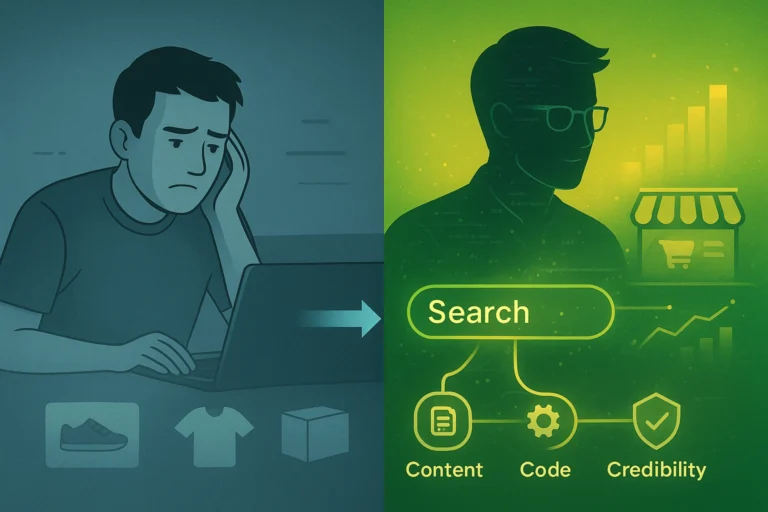
A great ecommerce SEO strategy is built on three pillars. When evaluating an agency, listen for how they plan to address each one in the context of your store.
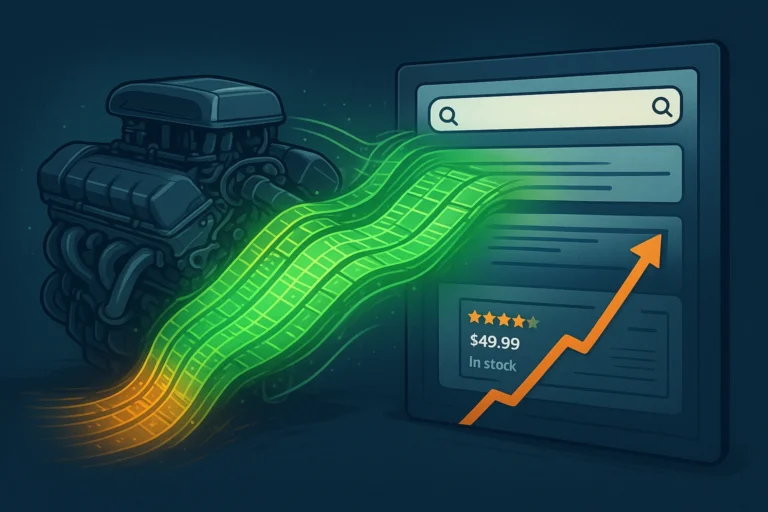
- Technical SEO: This is the foundation of your house. If it’s cracked, nothing else matters. For ecommerce, this includes optimizing site speed, ensuring mobile-friendliness, implementing product schema (structured data) so Google understands your prices and reviews, and managing the technical chaos of faceted navigation.
- Content SEO: This is the framing and interior design. It’s what attracts and engages customers. This goes beyond a blog. It involves crafting compelling category page descriptions, unique product descriptions that sell and rank, and creating helpful buying guides that capture customers early in their journey.
- Off-Page SEO: This is your store’s reputation around the web. For ecommerce, this means earning high-quality backlinks from relevant product review sites, industry blogs, and digital magazines. It’s about building authority and trust in Google’s eyes.
- GEO (Generative Engine Optimization): Think of this as preparing your store for the next generation of shoppers—those who’ll never even see a traditional search results page. Instead of typing queries into Google, they’ll ask AI assistants questions like, “What’s the best pair of running shoes for bad knees?” GEO ensures your brand and products show up in those AI-generated answers. It’s not just about keywords anymore; it’s about structured, data-rich content that helps AI models understand context—your product’s features, use cases, and unique advantages. This involves optimizing your product feeds, metadata, and on-site content so AI systems (like ChatGPT Shopping or Google’s AI Overviews) can interpret, trust, and recommend your products. In short, GEO is how you future-proof your SEO strategy for an AI-driven search world.
A competent agency won’t just talk about these pillars; they’ll explain how they connect to produce a single, powerful result: more sales.
Your 7-Point Agency Vetting Checklist
As you start talking to agencies, it’s easy to get lost in technical jargon and impressive-sounding presentations. Use this checklist to cut through the noise and focus on what truly matters.
1. Proven Ecommerce Experience (Not Just “SEO” Experience)
Don’t be afraid to ask for specifics. A portfolio of local business clients isn’t relevant.
- Key Question: “Can you show me case studies from ecommerce stores in a similar industry or with a similar catalog size? What was the direct impact on their organic traffic and revenue?”
2. Platform-Specific Expertise
An agency that primarily works with WordPress sites may not understand the unique ecosystem of Shopify apps and their impact on SEO.
- Key Question: “What is your experience with [Your Platform, e.g., Shopify, BigCommerce]? What are some common SEO challenges you see with it and how do you solve them?”
3. A Clear, Customized Strategy (Not a Cookie-Cutter Plan)
If their proposal feels like it could be for any online store, it’s a red flag. A true partner will have done their homework on your site, your competitors, and your industry.
- Key Question: “Based on your initial analysis of our website, what do you see as our top 3 biggest opportunities for growth in the next six months?”
4. Transparent Reporting & Communication
You should never have to wonder what your agency is doing or if it’s working. Look for a commitment to reporting on metrics that matter to your bottom line—like organic revenue, conversion rates, and transaction volume—not just vanity metrics like keyword rankings.
- Key Question: “What metrics are included in your monthly reports, and how do you tie your activities directly to our business goals?”
5. Realistic Timelines and Expectations
SEO is a long-term investment. Any agency promising page-one rankings in 30 days is selling snake oil. A trustworthy agency will set clear, realistic expectations for the first 3, 6, and 12 months.
- Key Question: “What does a realistic timeline for seeing meaningful traction look like for a store of our size?”
6. Client Testimonials and Reviews
Look beyond the curated testimonials on their website. Check third-party review platforms like Clutch or Google Reviews to get a more unfiltered view of what it’s like to work with them.
7. Cultural Fit and Partnership
Ultimately, you are hiring a partner, not just a vendor. Do they seem genuinely invested in your success? Do they communicate clearly and listen to your goals? This relationship is key to long-term success.
Red Flags and SEO Myths to Avoid
The SEO industry is unfortunately filled with misinformation. Being able to spot the myths and red flags will protect your brand and your investment.
- Myth 1: “We guarantee #1 rankings.”
- Fact: This is the oldest trick in the book. No one can guarantee rankings on Google, because they don’t control Google’s algorithm. Reputable agencies focus on proven strategies that lead to sustainable growth, not empty promises.
- Myth 2: “The cheapest agency is the best value.”
- Fact: In SEO, you almost always get what you pay for. Rock-bottom pricing often means outsourced, low-quality work that can get your site penalized. Focus on the potential return on investment (ROI), not just the monthly cost.
- Myth 3: “We have a secret sauce.”
- Fact: There is no “secret sauce.” Effective SEO is built on deep expertise, data-driven strategy, and consistent execution. Agencies that hide behind proprietary secrets are often masking a lack of a coherent strategy.
Watch for these red flags during your conversations:
- Vagueness about strategy: They can’t clearly explain how they’ll achieve results.
- Focus on vanity metrics: They talk more about rankings for obscure keywords than about traffic and sales.
- Use of unethical “Black Hat” tactics: Any mention of buying links, keyword stuffing, or using private blog networks (PBNs) should have you running for the door.
How to Compare Agency Quotes and Proposals
When you have a few proposals in hand, avoid the temptation to just compare the prices at the bottom. Here’s how to evaluate them like a pro:
- Look at the Scope of Work: Is one proposal offering a comprehensive technical audit, content strategy, and link-building campaign while another is just offering a few blog posts? Make sure you’re comparing apples to apples.
- Evaluate the Team: Who, specifically, will be working on your account? Are they seasoned ecommerce strategists or junior account managers? The experience of the team is often more important than the agency’s brand name.
- Analyze the Value Proposition: The best proposals don’t just list deliverables; they connect those deliverables to your business outcomes. They should articulate a clear path from their proposed activities to your goals of increased traffic, higher conversion rates, and more revenue.
Frequently Asked Questions (FAQ)
How much does ecommerce SEO cost?
Costs can vary widely, from a few thousand dollars per month for smaller stores to well over $10,000 for large, complex catalogs. The investment should be based on your goals, the competitiveness of your market, and the scope of work required.
How long does it take to see results from SEO?
While you may see some small wins in the first 3-4 months (like fixing technical issues), meaningful results in terms of significant traffic and revenue growth typically take 6-12 months. SEO is a marathon, not a sprint.
What’s the difference between SEO and PPC?
SEO (Search Engine Optimization) focuses on earning unpaid, organic traffic from search engines. PPC (Pay-Per-Click) involves paying for ads to appear in search results. A strong digital strategy often uses both, as they complement each other.
What kind of results should I expect?
A successful ecommerce SEO campaign should deliver measurable growth in key business metrics: increased organic traffic, a higher number of organic transactions, and a steady rise in organic revenue.
The Next Step: Preparing for Your First Consultation
Choosing the right ecommerce SEO agency is one of the most impactful decisions you can make for your business. By arming yourself with the right knowledge, you can move from a place of uncertainty to one of confidence. Before you get on that first call, take some time to prepare.
Have clear answers to these questions:
- What are your specific revenue goals for the next 12 months?
- Who are your top 3-5 competitors in organic search?
- What makes your brand and products unique?
Walking into a consultation with clear goals and a solid understanding of what to look for will ensure you find a partner who can help you turn your online store into the growth engine it was meant to be.