You have fantastic products, a beautiful website, and a brand story you’re proud of. The only problem? Getting shoppers to find you on Google feels like shouting into the void. You know “SEO” is the answer, but the term is so broad it’s almost meaningless. This is where the specific expertise of an ecommerce SEO specialist becomes a game-changer for your brand’s growth.
Unlike general SEOs who might focus on blogs or local services, an ecommerce specialist is a strategist laser-focused on one thing: turning search engine visibility into sales. They understand the unique digital aisles of an online store and know how to guide customers to your products. For businesses ready to move beyond guesswork, working with one is a critical step in building a sustainable revenue engine through trusted ecommerce SEO agency growth solutions.
Beyond “Ranking #1”: The Real Goal of Ecommerce SEO
The first “aha moment” for many store owners is realizing that ecommerce SEO isn’t just about hitting the top spot for a broad term like “women’s shoes.” It’s about attracting the right traffic—shoppers with a high intent to buy—and guiding them through a seamless journey from search result to checkout.
A general SEO might help a local bakery rank for “best cupcakes in town.” An ecommerce SEO specialist helps an online apparel store rank for “black linen midi dress size 12,” a search that signals a customer is ready to make a purchase. This focus on transactional intent is what separates them from the pack. They aren’t just driving clicks; they’re driving revenue.
The 3 Cs of Ecommerce SEO: A Specialist’s Core Framework
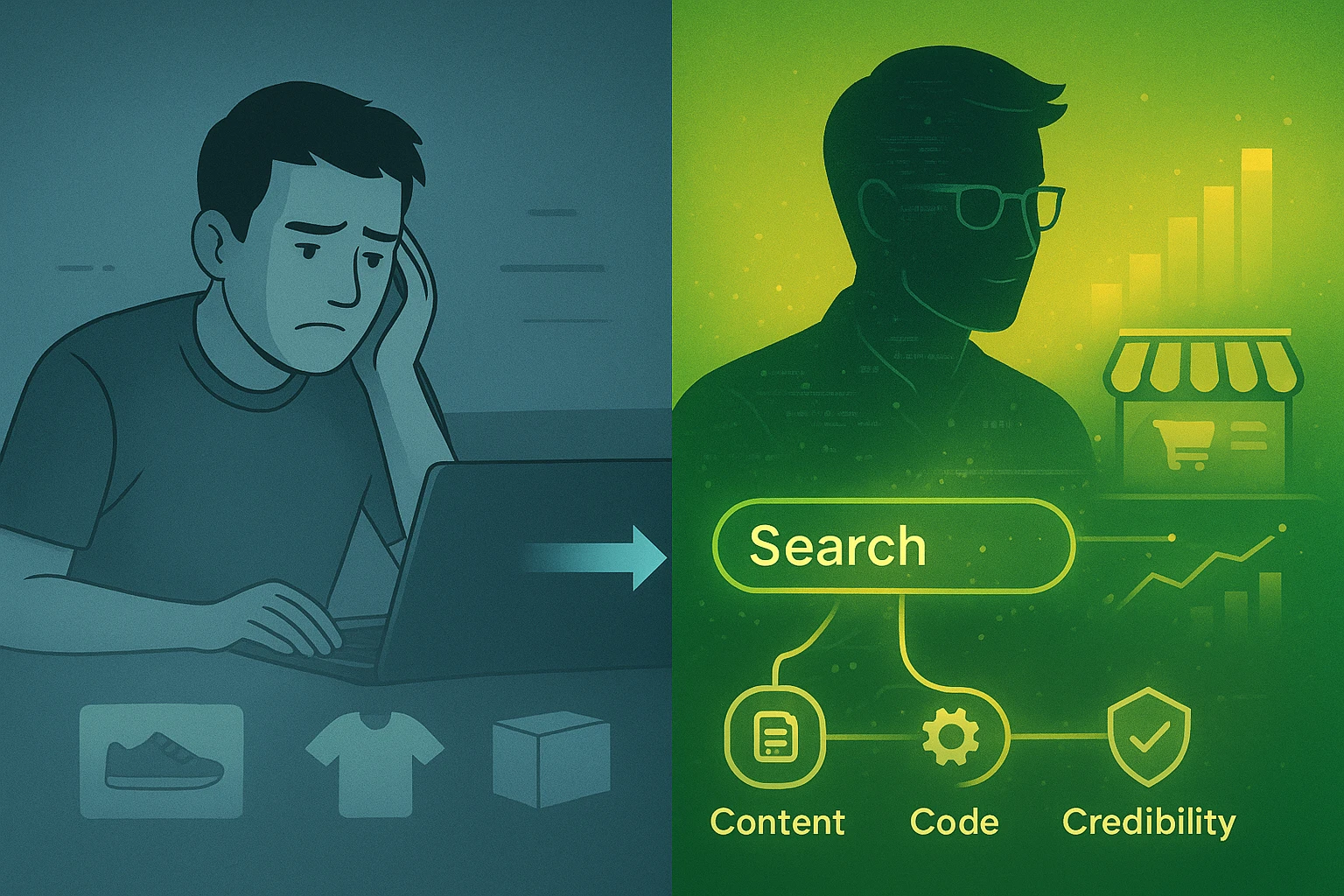
To make this complex world more approachable, specialists often think in terms of a simple framework: Content, Code, and Credibility. They masterfully weave these three elements together to build a powerful online presence.
1. Content: The Language of Your Products
This is more than just blog posts. For an online store, your most valuable content lives on your product and category pages. A specialist ensures this content speaks the language of both your customers and search engines.
- Product & Category Pages: They craft descriptions that not only sell but are also rich with the keywords real shoppers are using. They go beyond generic manufacturer descriptions to create unique, compelling copy that prevents duplicate content issues and highlights what makes your product superior.
- Buyer-Intent Keywords: They find the long-tail keywords (phrases of 3+ words) that reveal exactly what a shopper wants. Think “hypoallergenic dog bed for large dogs” instead of just “dog bed.” This specificity attracts highly qualified traffic.
- Supporting Content: They develop guides, comparisons, and articles that answer customer questions, building trust and attracting shoppers earlier in their buying journey.
2. Code: The Technical Foundation of Your Store
This is the “under-the-hood” work that makes or breaks an ecommerce site. If search engines can’t easily crawl, understand, and index your store, even the best content will be invisible.
- Site Architecture: They design a logical, intuitive structure for your site. This ensures that customers can easily navigate from your homepage to a specific product, and that search engine crawlers can understand the relationship between your pages. A clean structure helps spread “SEO authority” throughout your site.
- Site Speed & Mobile Experience: In ecommerce, every second counts. A specialist identifies and helps fix issues that slow your site down, knowing that slow-loading pages lead to abandoned carts and lower rankings.
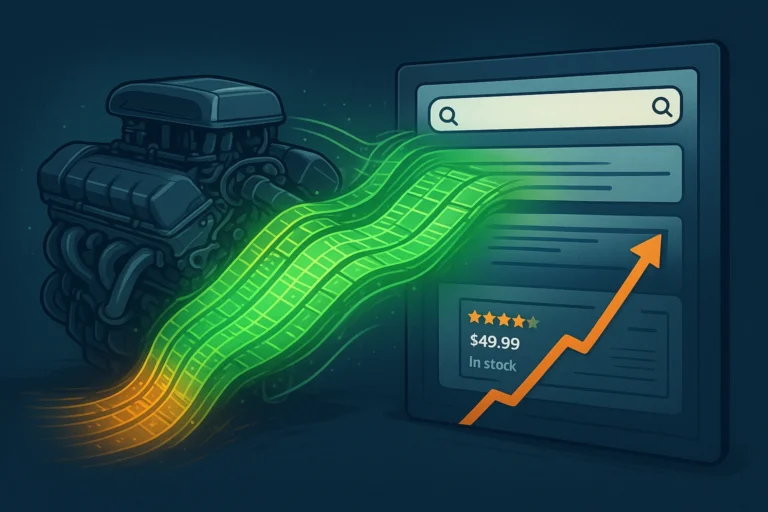
- Schema Markup: This is a type of code that helps Google understand the details on your page—like price, availability, and reviews—and display them directly in the search results as rich snippets, making your listings more attractive.
3. Credibility: Building Authority and Trust
Search engines want to recommend trustworthy, authoritative stores. A specialist works to build signals that prove your brand is a credible leader in its niche.
- High-Quality Backlinks: They earn links from reputable industry blogs, publications, and partners. These act as “votes of confidence” in the eyes of Google, boosting your site’s authority.
- Product Reviews: They implement strategies to encourage customer reviews, which provide both social proof for shoppers and fresh, relevant content for search engines.
- Brand Mentions: They monitor and encourage mentions of your brand across the web, reinforcing your market presence.
The Specialist’s Toolkit: Key Skills and Services
So, what does an ecommerce SEO specialist do all day? Their work is a blend of analytics, creativity, and technical precision.
Deep Keyword Strategy for Shoppers
They use advanced tools to uncover not just what people are searching for, but why. This allows them to map keywords to different stages of the customer journey, from initial awareness (“what are the best eco-friendly cleaning products?”) to purchase-ready (“buy plant-based multi-surface cleaner spray”).
On-Page Optimization for Products & Categories
This is the meticulous process of optimizing every crucial element on your pages, including:
- URL Slugs: Creating clean, descriptive URLs.
- Title Tags & Meta Descriptions: Crafting compelling headlines and summaries for search results that entice clicks.
- Image Alt Text: Describing images for visually impaired users and search engines.
- Internal Linking: Strategically linking between your pages to guide users and spread SEO value.
- Unique Identifiers: Ensuring product feeds use the right identifiers, whether that’s a GTIN, Brand/SKU combination, or another unique system to ensure accurate listing data.
- Content Creation: Utilizing advanced systems like an SEO AI agent can help scale the creation of high-quality, brand-aligned product descriptions across thousands of SKUs.
Technical SEO Audits
A specialist regularly performs deep dives into a site’s technical health to catch issues before they impact sales. This includes checking for crawl errors, broken links, duplicate content, and ensuring the site is secure (HTTPS).
Strategic Competitor Analysis
They don’t just look at what your competitors are doing; they analyze why it’s working (or not working). By using an ecommerce competitor spy tool, they can identify gaps in the market, find keyword opportunities your rivals have missed, and learn from their successes and failures.
Generative Engine Optimization (GEO)
The most forward-thinking specialists are already preparing for the rise of AI-driven search, like Google’s AI Overviews. GEO involves optimizing your content to be the definitive answer for conversational search queries, ensuring your brand is featured in these new, prominent formats. This is about establishing topical authority so AI models see you as the go-to source.
Agency, Freelancer, or In-House? Choosing the Right Specialist
Once you decide you need expert help, the next question is what kind. Each model has its pros and cons.
- In-House Specialist:
- Pros: Deeply integrated with your brand and team. 100% dedicated to your store.
- Cons: Can be expensive (salary, benefits, tools). You’re limited to one person’s expertise.
- Freelancer:
- Pros: Often more affordable than an agency. Can be hired for specific projects or on a retainer.
- Cons: Availability can be limited. May not have access to the same expensive tools or broad team knowledge as an agency. Vetting for true ecommerce expertise is crucial.
- Specialized Agency:
- Pros: Access to a team of experts (technical SEO, content, link building). Leverage powerful, proprietary tools and proven processes built from working with many clients.
- Cons: Can be a larger investment than a freelancer. It’s important to choose an agency that specializes in ecommerce, not a generalist firm.
Frequently Asked Questions (FAQ)
What’s the difference between SEO and SEM for ecommerce?
SEO (Search Engine Optimization) focuses on earning organic (unpaid) traffic from search engines. SEM (Search Engine Marketing) is a broader term that includes SEO but also encompasses paid advertising like Google Shopping Ads and PPC. A specialist often works closely with the paid media team to ensure strategies are aligned.
How long does it take to see results from ecommerce SEO?
SEO is a marathon, not a sprint. While some technical fixes can yield quick improvements, foundational results from content and authority building typically take 4-6 months to materialize and continue to grow over time. Be wary of anyone promising instant #1 rankings.
Can I do ecommerce SEO myself?
You can certainly learn and implement the basics, like writing good product descriptions and optimizing titles. However, the technical complexity, strategic depth, and time commitment required for competitive niches often necessitate a dedicated specialist.
How is ecommerce SEO different from regular SEO?
The core principles are the same, but the application is highly specialized. Ecommerce SEO deals with challenges like managing thousands of product pages, handling faceted navigation (filters), avoiding duplicate content from product variants, and optimizing for transactional keywords—issues not typically found on a blog or service-based website.
Your Next Step: From Learning to Action
Understanding the role of an ecommerce SEO specialist is the first step toward unlocking a powerful new growth channel for your business. They are far more than just “keyword people”—they are technical marketers, brand storytellers, and revenue strategists all in one.
Your immediate takeaway should be to look at your own site with fresh eyes. Are your product pages compelling? Is your site fast and easy to navigate? When you search for your own products, do you show up? Answering these questions will begin to reveal the opportunities that a dedicated specialist can help you seize. As your brand grows, transforming your product feed into a powerful driver of traffic and sales becomes the foundation of a truly dominant online presence.