Imagine your next customer isn’t a person browsing your site, but an AI assistant sent on a mission: “Find and buy the best 25L black travel backpack.” This isn’t a scene from a futuristic movie; it’s the new reality of e-commerce, and it’s poised to change the rules of online visibility.
AI agents are moving beyond simply answering questions to actively completing tasks—shopping, booking reservations, and making purchases on behalf of users. This shift demands a new way of thinking about how customers find you. Groundbreaking research offers a first look into how these agents behave, and the findings are a wake-up call for every e-commerce brand.
Here’s what this means for your brand: the foundations of SEO aren’t just relevant; they’re becoming more critical than ever, but with a significant twist.
The New Shopper on the Block: AI Agents
First, let’s get clear on what we mean by an “AI agent.” Think of it as a personal digital assistant that doesn’t just suggest links for your customers, but takes action on their behalf. They give it a goal, and it handles the drudgery—searching, filtering, comparing options, and even navigating the checkout process.
This fundamentally changes the customer journey. Instead of a human scrolling through pages of results, an AI does the work, only handing off to the human for the final decision or login. This convenience for the user creates a massive new challenge for businesses. How do you make sure an AI agent chooses you?
The #1 Spot Has Never Mattered More: Key Findings from the Front Lines
To understand how these agents operate, journalist Jes Scholz conducted over 100 tests with ChatGPT in its “Agent mode,” documenting its every move. Her findings, published in Search Engine Land, reveal a clear pattern of behavior that every marketer needs to see.
Finding #1: The Winner Takes All (And It’s Usually on Bing)
When you ask a human to find a product, they might look at the top three or four results, maybe even click to the second page. AI agents are far more decisive.
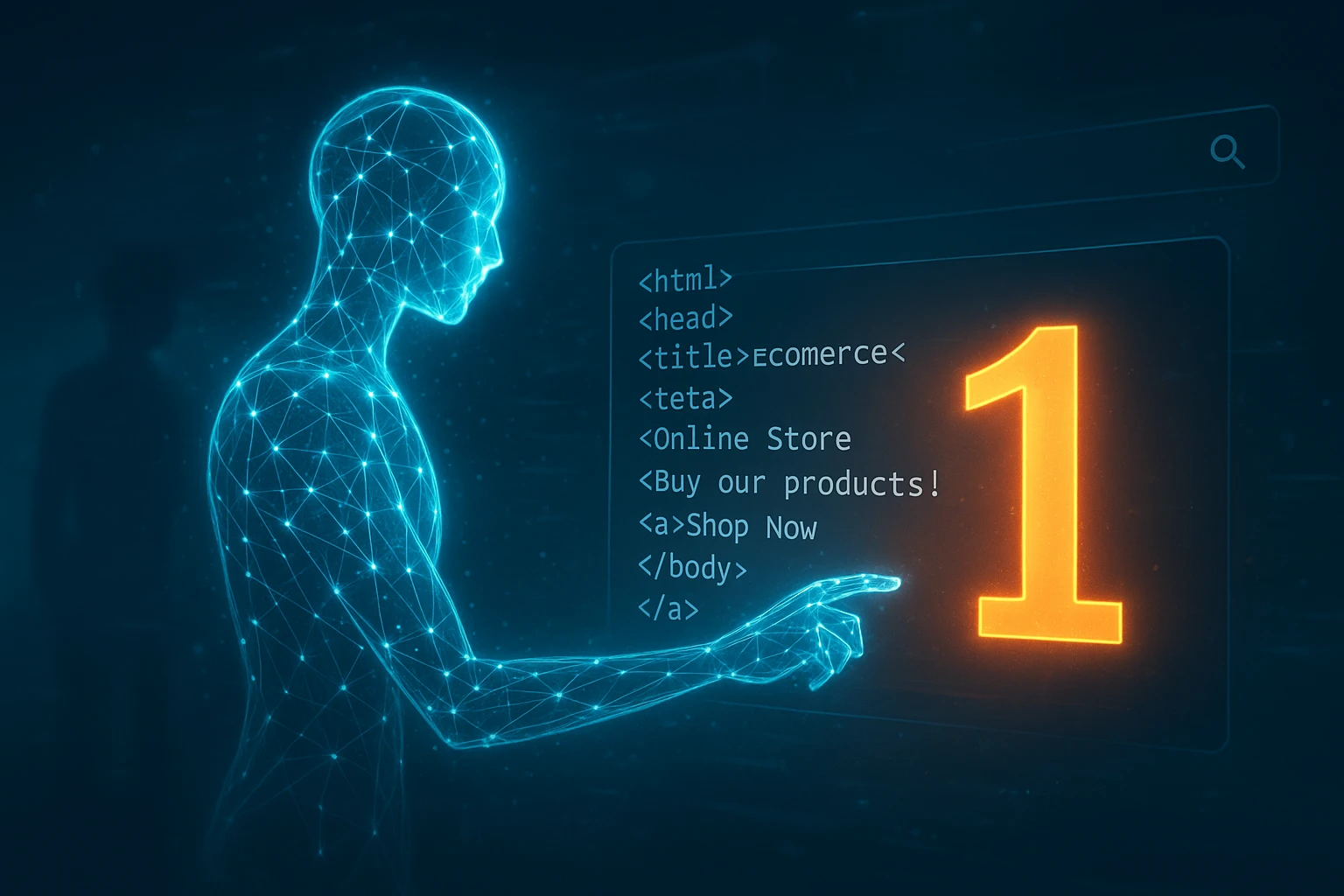
Scholz’s research found that in a staggering 63% of cases, the AI agent selected the very first search result.
If you’re not in that number one position, you’re practically invisible. The competition for the top spot is no longer about getting the most clicks; it’s about being the only choice.
And where are these agents searching? Not where you might think. The study revealed that 92% of the agent’s searches were powered by the Bing Search API. For years, many brands have treated Bing as an afterthought. That is now a critical mistake. A finely tuned Bing shopping feed is no longer optional—it’s your direct line to the next generation of shoppers.
Finding #2: Agents Don’t ‘See’ Your Beautiful Website
You’ve invested thousands in a beautiful, dynamic, and visually engaging website. But when an AI agent visits, it sees none of that.
The research showed that nearly half the time (46%), agents browse in a “reading mode.” This uses a text-based browser that strips your site down to its raw HTML.
- No images, CSS, or JavaScript.
- No pop-ups or slick overlays.
- No visually distinct calls-to-action.
Think of it like seeing the blueprint of a house instead of the fully furnished home. The agent only sees the structure: headlines, paragraphs, and links, all in plain text.
This is why clean code and semantic HTML are suddenly mission-critical. An agent understands a page through tags like <h1>, <p>, and <a>. If your site relies on visuals to guide users, an AI agent will get lost, abandon the journey, and move on to your competitor.
Finding #3: The Easiest Way to Lose a Sale Is to Block the ‘Bot’
Perhaps the most alarming discovery was how often agents failed before they even got started. 63% of first clicks ended in an immediate bounce.
The most common reasons were technical roadblocks that are invisible to most human users:
- Aggressive bot challenges (like CAPTCHAs)
- Unexpected page redirects
- Slow page load times
- Server errors
Legacy security systems designed to block malicious bots are now preventing legitimate, high-intent AI customers from accessing your site. If an agent hits a wall, it doesn’t try to solve the puzzle. It simply goes back to the search results and clicks on the next link—your competitor.
The Agent’s Journey: Why 83% of AI-Led Purchases Fail
Even if an agent successfully lands on your site, the journey is far from over. The study found that across more than 250 website visits, the final conversion rate was only 17%.
This massive drop-off happens because of friction points that, while annoying for humans, are complete dead ends for AI.
- Forced Registration: Requiring a login or account creation too early in the process often causes an agent to abandon the task.
- Poor On-Site Search: If an agent uses your search bar and gets zero results, it assumes the product isn’t available.
- Unfriendly Forms: An agent can’t complete a purchase if your checkout form is confusing or, even worse, uses a
mailto:link instead of a proper web form, as agents are not permitted to send emails.
The practical takeaway is this: An agent’s only goal is to complete its task efficiently. Every extra step or confusing element is a reason for it to fail and leave.
Adapting Your Strategy for the Age of Agents
This new landscape requires an evolution of our thinking—from Search Engine Optimization (SEO) to a more comprehensive Generative Engine Optimization (GEO). GEO is about making your entire digital presence, from your product feed data to your site’s code, perfectly legible and navigable for AI.
It’s about ensuring your site has:
- Technical Accessibility: Your site must be open and easy for agents to crawl without hitting security walls.
- Structural Clarity: Your content must be organized with clean, semantic HTML so an agent can understand the hierarchy and context of information.
- Conversion Efficiency: Your user journey must be frictionless, with clear paths to purchase that don’t rely on visual cues or create unnecessary hurdles.
Brands that get this right will gain a significant first-mover advantage. By optimizing for agents now, you establish your products as the default, reliable choice in their “minds,” building a competitive moat that will be difficult for others to cross.
Frequently Asked Questions (FAQ)
What is an AI shopping agent?
An AI shopping agent is a program that acts on a user’s behalf to find, compare, and purchase products online. Instead of providing a list of links, it aims to complete the entire transaction.
Why is Bing so important for AI agents?
Currently, major AI models like OpenAI’s ChatGPT often use the Bing Search API as their primary source for real-time information from the web. This makes ranking high on Bing essential for visibility with these agents.
How can I see what an AI agent sees on my site?
You can use a text-based browser like Lynx to simulate the experience. This will show you your website stripped of all styling and images, revealing the underlying HTML structure that an agent reads.
Will AI agents replace SEO?
No, AI agents make strong SEO more crucial than ever. However, the focus is shifting. Ranking number one is paramount, and technical, on-page SEO becomes just as important as keywords and backlinks. It’s an evolution of SEO, not a replacement.
How does this affect my Google Analytics?
Tracking agent traffic is notoriously difficult. It often gets bundled into “Direct” traffic, making it hard to measure. For now, analyzing your server’s bot logs provides a more accurate, albeit more technical, view of agent activity on your site.
Your Next Step into the Agent-Driven Future
The rise of the AI shopper is not a distant possibility; it’s a present-day reality that is quietly reshaping e-commerce. The brands that will win in this new era are the ones who act now to make their sites not just human-friendly, but agent-ready.
Understanding this shift is the first step. The next is to evaluate how your product data, site structure, and conversion funnels stack up in this new context. To see how this holistic approach can be applied, learning more about what a top-tier Google shopping SEO agency provides is a great place to start building your knowledge. The digital shelf is evolving, and ensuring you’re on it requires a new level of technical excellence.