Every eCommerce brand sends abandoned cart emails. But let’s be honest: most of them are the same. A generic subject line, a picture of the product, and a hopeful “Come back and buy!” message, often with a 10% discount coupon attached.
Here’s the problem with that approach: you’re sending the exact same message to two completely different shoppers.
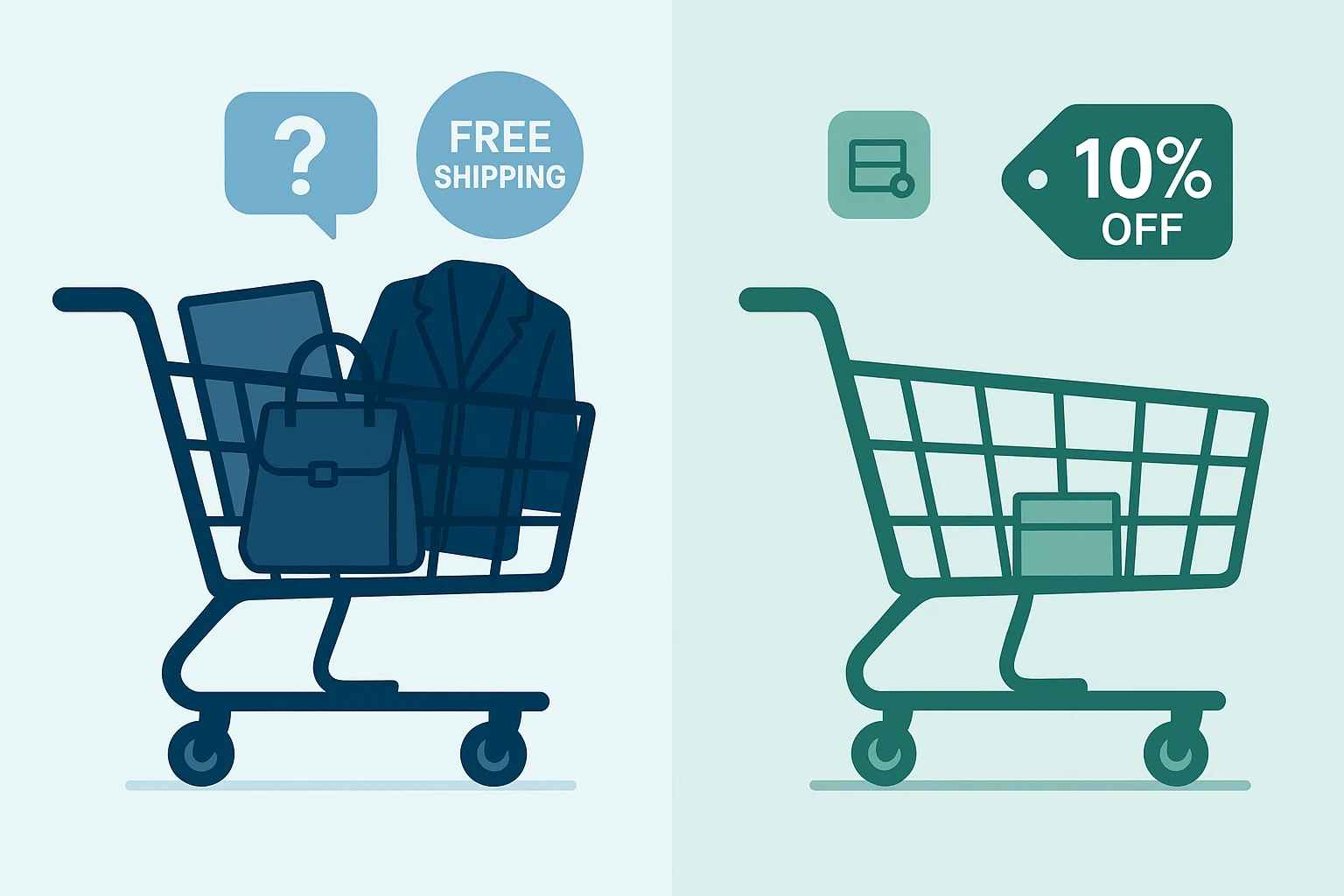
One shopper abandoned a $500 cart full of your best-sellers. They were one click away from a major purchase. The other clicked on a single $20 item, added it to their cart out of curiosity, and left.
Should they really get the same email? The same discount? Absolutely not. Treating them the same is like a salesperson using the same pitch for a customer ready to buy a car and someone just kicking the tires. It’s lazy, and it’s costing you money.
The one-size-fits-all recovery campaign is dead. The future is about segmentation—treating different shoppers differently. And it’s not nearly as complicated as it sounds.
What is Abandoned Cart Segmentation, Really?
Think of it like having a conversation. You wouldn’t talk to a new acquaintance the same way you talk to a loyal friend. Abandoned cart segmentation applies that same logic to your customers. It’s the practice of dividing shoppers who leave your site into different groups based on their behavior and then sending them tailored messages that actually resonate.
Research shows that a sequence of three abandoned cart emails can recover up to 26% more sales than a single email. But if all three emails are generic, you’re still leaving money on the table. Personalization is the key to unlocking that potential.
For now, let’s forget the dozens of possible segments and focus on the two that will make the biggest immediate impact on your revenue.
The Two Most Important Segments to Start With
If you’re just starting, mastering these two groups will put you lightyears ahead of the competition.
Segment 1: The High-Value, High-Intent Shopper
Who they are: This person was serious about buying. They likely added multiple items, their cart value is well above your average, and they might even be a returning customer. Life just got in the way—a phone call, a crying baby, or a last-minute question about shipping.
How to talk to them: Their intent was high, so they don’t need a big bribe to come back. In fact, offering a deep discount here is like throwing profit away. They need reassurance and a gentle nudge, not a sales pitch.
- Trigger Conditions: Cart value is over a set threshold (e.g., >$150), they are a returning customer, or they have 3+ items in their cart.
- The Right Strategy:
- Lead with customer service: Instead of “Here’s 15% off,” try “Did you have any questions about your order?”
- Remove friction: Remind them of your free shipping, easy returns, or satisfaction guarantee.
- Create urgency (gently): Mention that popular items might sell out.
- The Incentive: If you offer one, make it value-based, not price-based. Think free shipping or a small gift with purchase, not a blanket 20% off.
Practical takeaway: Don’t offer a steep discount to a shopper who was ready to buy a $500 cart. You’re not just recovering a sale; you’re preserving your profit margin.
Segment 2: The “Just Browsing” Window Shopper
Who they are: This person is in the early discovery phase. They might have added a single, low-value item to their cart to save it for later or to see the final shipping cost. Their intent to purchase right now is low.
How to talk to them: A hard sell will push them away. Your goal isn’t necessarily an immediate sale, but to stay top-of-mind and nurture their interest. You want to remind them why they were interested in the first place.
- Trigger Conditions: Cart contains only one item, cart value is low (e.g., <$50), or they are a new visitor.
- The Right Strategy:
- Remind and inspire: Show them the product they left behind, but also suggest other best-sellers or related items.
- Use social proof: Include customer reviews or user-generated content for the abandoned product.
- Focus on the brand: Talk about what makes you different, not just the product.
- The Incentive: This is where a small, time-sensitive discount (e.g., “10% off for the next 24 hours”) can be effective to create urgency and push a low-commitment shopper over the edge.
Putting Theory into Practice: Lessons from Top Brands
This isn’t just theory. Big brands have been using segmentation to drive massive results for years.
Gymshark: The Power of Timing and Simplicity
According to SocialTargeter, fitness apparel giant Gymshark recovered an estimated 20% of abandoned carts by implementing a simple, timed sequence. Their first email goes out one hour after abandonment, acting as a simple reminder. The second follows at 24 hours with a touch of urgency.
Their strategy isn’t overly complex, but it’s segmented by timing and personalized with the customer’s name and abandoned items. It proves that you don’t need a dozen intricate rules to see a significant lift.
ASOS: Turning Browsers into Buyers with Smart Retargeting
SocialTargeter also shared about how online fashion retailer ASOS is a master of behavioral segmentation. When a user abandons a cart, they don’t just get an email. They start seeing ads on Facebook and Instagram featuring the exact products they were just looking at. This hyper-relevant retargeting campaign reportedly achieved a 5x return on ad spend.
This demonstrates the power of meeting customers where they are and using their own browsing data to create a compelling reason to return. A key part of this is knowing what your competition is doing, which is where an ecommerce competitor monitoring system can provide critical intelligence on their promotions and product strategies.
Beyond the Basics: Advanced Segmentation Strategies
Once you’ve mastered the high-value vs. browse abandoner segments, you can add more layers of sophistication to your recovery strategy. These strategies can often be automated with the right tools, and many brands are now using custom AI agents for ecommerce to manage these complex workflows at scale.
Here are a few more powerful segments to consider:
- By Product Category: The way you sell a $1,000 piece of furniture is different from how you sell a $15 t-shirt. Segment your messaging based on the category. For high-consideration items, focus on FAQs, financing options, and detailed specs. For simpler items, focus on style and social proof.
- By New vs. Returning Customers: A first-time shopper needs to be convinced of your brand’s trustworthiness. Include your mission, key value props, and reviews. A returning customer already trusts you; they just need a reminder.
- By Purchase History: If a customer has only ever purchased sale items, they are likely price-sensitive. A discount is more likely to work on them. If another customer always buys full-price, they are less motivated by discounts and more by quality or new arrivals.
Common Mistakes That Sink Recovery Campaigns (And How to Fix Them)
It’s easy to get this wrong. Here are the most common pitfalls we see:
- Bad Timing: Sending an email two seconds after someone leaves feels intrusive. Sending it two days later is useless.
- The Fix: Test your timing. A popular sequence is 1 hour, 24 hours, and 72 hours after abandonment.
- Generic Offers: Sending “10% off” to everyone devalues your brand and eats into margins.
- The Fix: Use the segmentation strategies above. Reserve your best offers for new customers or for clearing out specific inventory.
- Ignoring Mobile: Over half of all web traffic is on mobile. If your emails and checkout process aren’t optimized for a phone screen, you’re losing sales.
- The Fix: Test your entire recovery flow on a mobile device. Is it easy to read? Can you complete the purchase in just a few taps?
Frequently Asked Questions (FAQ)
Why are my abandoned cart emails going to spam?
This often happens due to low engagement rates (people aren’t opening or clicking) or using spammy subject lines with words like “Free!” or “Act now!”. Ensure your email list is clean and that you’re providing real value, not just a sales pitch.
How many emails should be in an abandoned cart sequence?
Three is the industry standard and a great starting point. The first is a gentle reminder, the second often introduces some urgency or social proof, and the third might present an incentive if the cart is still not recovered.
Should I offer a discount in my first email?
Generally, no. The first email should be a customer service-focused reminder. Many shoppers will convert without any incentive. Hold your discount offer for a later email in the sequence, and only for specific segments that you know are price-sensitive.
What’s the difference between browse abandonment and cart abandonment?
Cart abandonment is when a user puts items in their cart but doesn’t complete the purchase (high intent). Browse abandonment is when a user looks at products but never adds anything to their cart (lower intent). Both can be targeted, but cart abandoners are a much hotter lead.
Your Next Step: From Insight to Implementation
Moving from a generic, one-size-fits-all approach to a segmented strategy is a fundamental shift. It’s about listening to your customers’ digital body language and responding appropriately. This same principle of understanding user intent is the foundation of modern search and discovery, making a deep understanding of generative engine optimization (GEO) crucial for long-term growth.
You don’t have to boil the ocean. Start small. This week, create two simple segments: one for carts over $150 and one for carts under. Write two different email sequences.
You’ll be amazed at the difference it makes when you stop shouting the same message at everyone and start having a real conversation.