As an e-commerce leader navigating a seven-figure brand, you know the stakes are high. You’re constantly evaluating solutions that promise to scale your operations, boost revenue, and protect your brand’s reputation.
But when it comes to managing vast product catalogs—we’re talking 100,000 SKUs and beyond—the difference between a good solution and a great one isn’t just about features; it’s about resilience, precision, and a fundamental shift from reactive fixes to proactive control.
You’re not looking for a quick patch. You need a robust system that can handle the volume and complexity of enterprise-level product data across every channel your customers interact with. The challenge isn’t just getting your products online; it’s ensuring every single data point is accurate, compliant, and optimized. This isn’t a “nice-to-have”—it’s a critical revenue driver.
The Enterprise Data Dilemma: Navigating 100,000+ SKUs Across Omni-Channel Commerce
Imagine managing a catalog so extensive it’s less a spreadsheet and more a sprawling digital city. For enterprise e-commerce brands, this is the daily reality. Each SKU is a complex organism with attributes, images, pricing, and descriptions, all needing to be aligned across Google Shopping, Amazon, social media, and your own website.
The struggle is real. Brands with massive catalogs face constant pressure:
- On-boarding delays: Manually preparing and tagging new products can take anywhere from 30 to 60 days, significantly delaying your time-to-market and losing precious sales windows (Vue.ai, Aleran).
- Inaccurate data: Product information often lives in disparate systems, leading to mismatches between your ERP, PIM, and marketing channels. One price on your site, another on Google Shopping? That’s a trust killer.
- Multi-channel complexity: Every channel has unique requirements. Adapting product feeds for each platform without automation becomes an insurmountable task, leading to errors and missed opportunities.
- Scalability bottlenecks: As your catalog grows, manual processes don’t just slow down; they break. What worked for 10,000 SKUs buckles under the weight of 100,000 or a million.
This complexity isn’t just frustrating; it’s costly. Your customers demand seamless experiences, and any hiccup in your product data directly impacts their journey—and your bottom line.
Unmasking the Hidden Costs: The True Impact of Poor Product Data Quality
Many companies underestimate the financial and reputational damage inflicted by subpar product data. It’s not just a minor annoyance; it’s a gaping hole in your revenue bucket.
Consider these sobering facts:
- Lost Sales & Conversions: Inaccurate product data can lead to a 23% drop in clicks and a 14% drop in conversions (McKinsey, DataFeedWatch). Imagine the cumulative impact across your entire catalog.
- High Return Rates: A staggering 23% of all product returns are due to inaccurate product information (McKinsey, Shop-Vibes, Eklipse Creative). This translates to billions in lost revenue annually.
- Brand Erosion: 86% of consumers will not shop again with retailers providing poor data (Shop-Vibes). This isn’t just about a single transaction; it’s about long-term customer loyalty and lifetime value.
- Rejected Listings: On average, 7% of all e-commerce product feed items are rejected due to data errors (DataFeedWatch, SearchEngineLand). This means a significant chunk of your inventory isn’t even making it to market, let alone converting.
The hidden costs extend to increased operational expenses as well. Your team spends countless hours troubleshooting errors, answering customer service inquiries stemming from misinformation, and manually updating disparate systems. This drains resources that could be better spent on strategic growth.
Practical takeaway:
Poor product data isn’t a back-office problem; it’s a front-office crisis. It directly impacts your P&L, damages customer trust, and hinders your competitive edge.
Beyond Optimization: The Imperative of Automated Feed Governance
While “feed optimization” often focuses on improving titles, descriptions, and images for better search performance, enterprise-scale brands need to think bigger. They need automated feed governance.
What is comprehensive product data governance for enterprises? It’s a holistic system of rules, policies, and intelligent stewardship that ensures your product data is accurate and compliant from its source to every single customer touchpoint. It’s about building a scalable, resilient feed management workflow that prevents problems before they start.
This means:
- Standardized Data: Enforcing accurate data formats and attribute values across all product categories.
- Policy Enforcement: Automatically applying rules for channel-specific requirements, such as character limits for Microsoft or Google Shopping titles.
- Compliance Checks: Ensuring your product data adheres to platform policies—automating what would otherwise be a monumental manual audit.
- Error Prevention: Proactively identifying and correcting potential issues like missing identifiers, incorrect pricing, or mismatched categories before they hit your live feeds.
Automated governance isn’t just about tidiness; it’s about safeguarding your brand’s integrity and ensuring every product listing performs at its peak. It’s a strategic investment for long-term stability and compliance in a rapidly evolving digital landscape.
The AI Advantage: Automated Rule Implementation for Scalable Feeds
Here’s where AI truly shines for enterprise e-commerce. Manual rule creation for 100,000+ SKUs across dozens of channels is a huge lift. AI and machine learning with humans in the loop transform this challenge into an opportunity for hyper-efficiency.
Our proprietary Feedzly platform—built by marketers, for marketers—leverages advanced AI to drive automated rule implementation. This isn’t just basic IF/THEN logic; it’s dynamic, intelligent automation that adapts to your evolving needs.
Imagine:
- Dynamic Attribute Mapping: AI can learn preferred attribute structures for new channels and automatically map your product data, reducing manual setup time dramatically.
- Contextual Content Generation: Beyond simple keyword insertion, AI can generate GEO and SEO-friendly product descriptions and titles that maintain your brand voice, using natural language processing (NLP) to understand product context and target audience.
- Automated Categorization: AI can automatically categorize products with high accuracy, even for complex or niche items, significantly speeding up onboarding and improving discoverability.
This level of intelligent automation is crucial for maintaining high-throughput capabilities. It ensures your product feed management software is always working efficiently, processing millions of data points and adjusting in real-time. This is how you build a resilient digital infrastructure.
From Detection to Resolution: Large-Scale Error Remediation Workflows
Most feed management tools can be used to fix errors. But for enterprises, simply knowing an error exists isn’t enough. You need a solution that goes beyond flagging to quickly resolving errors at scale, turning a bottleneck into a fluid workflow.
Shopping AI Pro’s custom AI agents and Feedzly platform are engineered for this. We move past error detection to proactive error resolution across vast catalogs, identifying, prioritizing, and fixing complex data errors without requiring human oversight for every single issue.
Consider these scenarios:
- Missing identifiers: The system automatically identifies products missing critical identifiers and, where possible, suggests or sources compliant data.
- Incorrect Attributes: AI learns from historical data and channel requirements to correct misassigned product conditions, sizes, or colors.
- Image Compliance: Images that fail to meet channel specifications (e.g., background, aspect ratio, size) are flagged and, in many cases, automatically adjusted or replaced using integrated image processing.
- Pricing Discrepancies: Automated checks ensure consistent pricing across all channels, preventing customer dissatisfaction and potential policy violations.
The opportunity is real, but so are the risks of ignoring these systemic issues. By automating remediation, you safeguard against financial losses and maintain approved listings that stay approved, which is critical for winning customer trust and reducing the 23% of returns attributed to inaccurate product information. This is the practical takeaway of genuine enterprise-scale feed optimization: it’s about minimizing risk and maximizing certainty.
Real Resilience: Synchronizing Inventory & Data for Uninterrupted Commerce
In today’s fast-paced e-commerce environment, inaccurate data synchronization can lead to disastrous consequences. Over-selling out-of-stock items, promoting outdated prices, or missing crucial inventory updates directly impacts customer satisfaction and your reputation.
Did you know nearly 60% of online shoppers were impacted by out-of-stock issues (Extensiv, SKUPlugs)? This highlights the absolute necessity of inventory and data synchronization. Our platform is built with high-throughput capabilities to ensure continuous, precise data flow.
Here’s what this means for your brand:
- Preventing Overselling: Scheduled inventory updates prevent you from selling products that are no longer available, avoiding costly cancellations and customer frustration.
- Accurate Pricing: Ensure promotions, sales, and price adjustments are reflected instantly across all channels, maintaining consistency and trust.
- Optimized Ad Spend: Your PPC campaigns leverage current product data, ensuring you’re not spending money advertising out-of-stock or inaccurately priced items.
- Reduced Operational Friction: Automated synchronization minimizes the manual effort required to keep data consistent, freeing your team to focus on strategic initiatives.
This focus on the most accurate data flow is integral to building a future-proof digital shelf and delivers a significant competitive advantage. It’s not just about managing data; it’s about orchestrating your entire e-commerce operation with seamless precision.
Building a Future-Proof Digital Shelf: The Role of a Unified Product Data Platform
The future of e-commerce isn’t about piecing together disparate tools. Gartner predicts the convergence of data platforms into a single retail data ecosystem by 2028, driven by AI. For enterprise brands, this means moving toward a unified product data platform that consolidates the best of Product Information Management (PIM), Digital Asset Management (DAM), and advanced feed management.
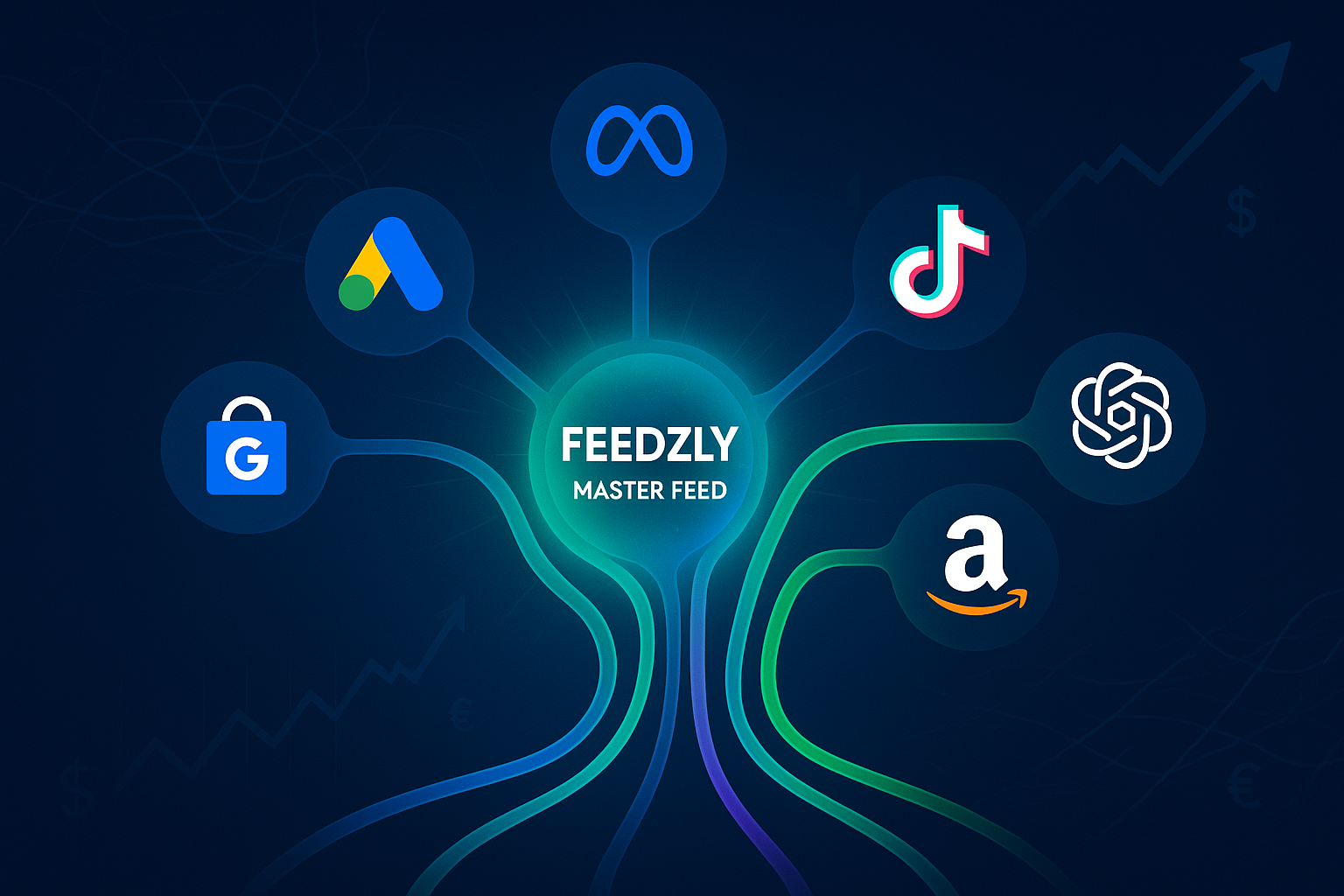
Shopping AI Pro’s ecosystem embodies this vision. Our approach integrates our proprietary Feedzly product feed platform with custom AI agents and specialized services like our Google Shopping SEO Services to create a comprehensive solution for enterprise growth.
This integrated architecture means:
- Single Source of Truth: All your product data—from core attributes to rich media—is managed and optimized from a central, intelligent hub.
- Enhanced SEO & GEO: Optimized product feeds work in tandem with our SEO AI Agent to build topical authority and ensure maximum visibility in traditional search and emerging AI-driven discovery platforms.
- Strategic Insights: Our Ecommerce Competitor Spy Tool feeds crucial market intelligence directly into your data governance and optimization strategies, allowing you to react faster than manual monitoring allows.
- Scalability for the Future: As AI agents transition from a “nice-to-have” to “table stakes” in the next 12-24 months, our platform ensures you’re ahead of the curve, leveraging custom-trained AI that understands your brand’s unique needs.
This is more than just a feed management platform; it’s a full-service, AI-powered growth engine designed to deliver brand-aligned results at scale.
Ready to Transform Your Product Data into a Powerful Growth Engine?
If you’re a 7-figure e-commerce brand struggling with the complexities of managing a massive product catalog, the time for true enterprise-scale feed automation and governance is now. You need a partner who understands the challenges, delivers proprietary solutions, and drives quantifiable results.
Shopping AI Pro offers more than just a tool; we offer a complete, AI-powered ecosystem designed by performance marketers for performance marketers. We help you move beyond basic optimization to a future-proof strategy that protects your revenue, builds customer trust, and scales your business with unparalleled efficiency.
Don’t let poor product data hold your brand back any longer. It’s time to unlock the full potential of your product catalog.
Discover how our expert team and cutting-edge feed management software can elevate your brand.